Episode Transcript
[00:00:01] Speaker A: In the summer of 1989, a recent high school graduate left her parents home in Hawassee to pick up some medicine for her father, dish soap and sugar.
The teen left Phillips Food Store in Bella Vista around 3:17pm July 25, 1989, but she never returned home. It was the last time anyone reported seeing Dana Stidham alive.
Two months later, her remains were found in a creek bed in far eastern Bella Vista, not far from the Arkansas Missouri state line.
Decades later, her murder remains unsolved.
What happened to Dana Stidham? Why has there never been any arrests?
Is it a mystery lost to time? Or is there still a chance one day the public will know the whole story?
Will a lawsuit currently working its way through the court system shed any new light on the case?
This is Crime in the Ozarks, a northwest Arkansas Democrat Gazette podcast.
We'd love to hear from you. Make sure to follow us wa Demgas on Instagram and share your opinions on this case.
If you're listening on the Spotify app, swipe up and comment below.
This episode contains discussion of murder and violence against women. Please consider this when you listen.
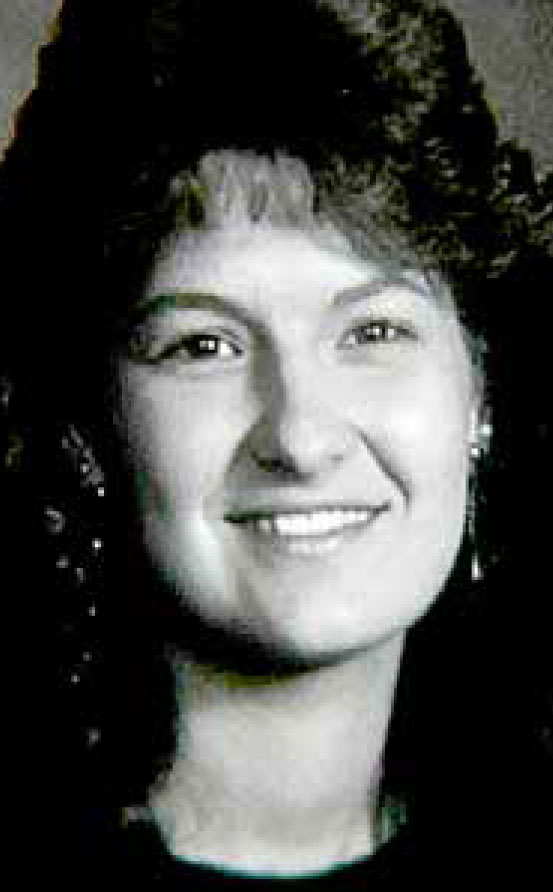
Now let's get into the case A Typical Little old Sweet girl Dana Linnell stinham was born March 8, 1971, to parents Georgia and Lauren Stinham. She grew up in Hawassee, Arkansas and lived there until she graduated high school.
Dana graduated from Gravett High School in June of 1989.
Finally an adult, she moved to Centerton, a little under eight miles away from her parents, to live in an apartment with her older brother Larry and some friends in her small community. Dana was well known and and well liked. Mike Sidoriak was a detective in Bella Vista when Dana went missing and was the lead investigator on her case for years.
He said he often saw her at local dances where he would chaperone.
Dana was always there. All the kids knew her and a lot of kids liked her.
[00:02:00] Speaker B: What people can describe happy, go, lucky, sweet, friendly. No one said a bad word about her.
It's, you know, just shameful what happened.
[00:02:08] Speaker A: So this is Brandon Howard. He is a journalist who has covered this case and has a lawsuit regarding the case pending in Circuit Court.
Her mother described Dana as a girl who loved babies and old people, could never hurt anyone, and didn't believe in holding grudges. Georgia Stidham said her daughter used to say, life is too short. There's no reason to hold any grudges.
Family and friends describe Dana as a young woman living a typical teenage life. Her favorite holiday was Christmas she collected unicorns, made ceramics and liked to paint and draw.
She often babysat for young couples and was heavily involved with her family.
Danny Varner, a family friend who was a sheriff deputy when Dana went missing, said she was a typical little old sweet girl getting used to life as a high school graduate. Dana was planning the next stage in her life that summer in 1989.
Like many of her peers, her family said she was considering enrolling at the University of Arkansas in Fayetteville. Her mother said in an interview following her murder, she had the whole world open to her. She just had to decide what she wanted to start out with.
[00:03:17] Speaker C: That's the one, that's the number one case that we get asked about.
[00:03:22] Speaker A: This is Lieutenant Hunter Petrie. He's an investigator with the Benton County Sheriff's Office who has worked on this.
[00:03:27] Speaker C: Case and rightfully so. You know she was, had just turned 18, had just graduated high school from Gravett.
Small town, tight knit community.
So it hit home with a lot of people and that's the one that we get asked about all the time.
[00:03:49] Speaker A: Part 2 the Disappearance July 25, 1989 started as any other day for Dana Stidham. Earlier in the day Dana went to her parents house to do a load of laundry.
While she was home her father began to feel ill and asked Dana to do him a favor, go to the local convenience store and pick up some over the counter medicine. Dana agrees, leaving in late afternoon for Philip's Food Store in Bella Vista, the location of her old part time job instead of the convenience store around the corner.
It's unclear why Dana made this decision. Maybe she wanted to see old co workers.
Perhaps she wanted the extra time to drive or maybe she was avoiding someone. The answer is unknown.
What we do know is that on her way to the convenience store she stopped briefly for gas.
Dana was seen wearing white shorts, a white top with red letters, red socks and white tennis shoes.
Dana got to the store just after 3pm and and by 3:17 she had picked her items and checked out. On her way out of the store she visited with some friends and was seen speaking briefly with an older man before driving away in her 1984 grey Dodge Omni.
She never returned to her parents home.
That evening family members began searching for Dana.
They were immediately concerned given that she had only left to run a brief.
[00:05:08] Speaker C: Errand around 6:37 o' clock she had not returned home.
Her parents, her brother become concerned. You know they start going around asking people hey have you seen Dana?
No, we haven't seen her okay, Something's wrong.
[00:05:29] Speaker A: They notified Danny Varner, the sheriff's deputy of Benton county, about her disappearance.
Varner jumped into action, issuing a bulletin for Stidham and her car and notified sir, the detective Sdoriak later said of the disappearance. The biggest thing is we don't know what happened to her after she left the store. Her parents and no one else reported seeing her after that. It's like she dropped off the map. And that's the problem.
The next morning, around 6:30am a sheriff's office sergeant, Karen Myers, spotted her car at the intersection of Wellington Road and U.S. 71 on her way to work.
Investigators immediately noticed a few strange things. The Dodge had half a tank of gas and the keys were in the ignition. Its left rear tire was low on air and there was no sign of a struggle.
Additionally, the driver's seat had been adjusted in a way that led investigators to believe that a much taller person than the 5 foot 2 Dana was the last one to drive the car. Police searched the wooded area next to where her car was found and discovered discarded articles of clothing belonging to Dana.
Suak implied that the car had been placed there in the early morning hours, stating in interviews that state troopers had been in the area running radar until close to midnight on July 25, and none of them had reported seeing the car.
He said, quote, nobody saw the car there, and then all of a sudden it showed up the next morning.
Cooperating this theory, Dana's family had also been searching for her going up and down US 71, and none of them saw the car. Despite finding the car, Dana was still nowhere to be found.
Days turned into weeks as authorities searched for Dana using various methods, including deputies on horseback, police dogs, and appeals to the public to come forward with information about the missing teen. On August 1st, a Bella Vista resident found some of Dana's bank records and other items scattered along a Bella Vista road. By mid August, a $5,000 reward was offered for information leading to the young woman's location.
Then, on a Sunday in mid September, a squirrel hunter made a gruesome discovery. The skeletal remains of a young woman in a wooded area near the Missouri state line.
By the following Tuesday, the state medical examiner confirmed that the body was that of Dana Stidham. A missing person case had become a homicide investigation.
Part 3. Who killed Dana Stidham?
After Dana's partial remains were found, police believed her body was buried in a shallow grave that could have been exposed by rain. Her remains were scattered over an area approximately 100 square feet, perhaps scattered by wild Animals. The hunter who discovered the remains waited a whole day to report it. At first glance, he didn't think much of it. He said he thought they must have been there for at least a couple years and possibly were relics from as far back as the Civil War.
He later expressed his regret at waiting to tell authorities what he'd found. In the aftermath of identifying the remains, authorities tried to piece together what had happened to Dana.
[00:08:30] Speaker C: The body was sent for an autopsy, of course, and the autopsy came back and determined the cause and manner of death as stab and obviously homicide.
So very tough for the family, obviously, and the friends and the people that worked the case to have that outcome, you know, and it was such a remote area where she was found.
[00:09:01] Speaker A: You.
[00:09:02] Speaker C: Know, you have to wonder if, if somebody actually knew that area, you know, it would.
I don't know, I kind of find it hard to believe that it would just be some random person that did know Bella Vista.
[00:09:15] Speaker A: The autopsy generated little for detectives to work with. Her remains were badly decomposed and exposed to the elements for weeks.
Additionally, police were never able to find Dana's missing sternum. Sodoriak once called the missing sternum the most important bone for investigators because any conclusive determination on cause of death would hinge on what they found there.
Heartbroken but determined, Dana's friends and family raised thousands of dollars to fund an award for any information that would lead to finding Dana's killer. But helpful information proved scarce.
By early 1990, the Arkansas State Police assigned an officer to the case and the FBI took on a consulting role. The Sheriff's office announced in February of that year that they were even going so far as to employ the help of a hypnotist to help witnesses remember details.
Then Benton County Sheriff Andy Lee said of the approach, the witnesses feel like they would have more to tell if they could just remember it. So we're going to see if a hypnotist will help.
Police reported later that the hypnotist helped a former sheriff's office dispatcher who was a witness in the case remember more details. But concerns were raised about the legalities of using information obtained under hypnosis, especially in a court.
Later that month, authorities announced that they were looking for a white man who was seen in a small brown or cream colored pickup. A witness had told police he had saw a man bent over behind Dana's car at about 6am July 26.
Varner said police believed the man had been ducking, trying not to be seen with one of the tires of Dana's Car being flat, police wondered if the killer had punctured the tire to make it appear as if Dana had had a flat in Bella Vista and left on foot before being abducted.
Police developed a few suspects, including a former high school classmate of Stidham. For privacy reasons, we won't be using any real names of the suspect in this case.
However, to make it easier to follow, we will call this first suspect John.
Sodoriak previously said John had always wanted to date Dana, but she, quote, didn't want nothing to do with him.
He thought back to the timeline. Why had Dana gone all the way to Bella Vista instead of a store within Hawassi only a few blocks from her parents home? He later learned John frequently sat at that lot.
In fact, his parents owned the store and Dana actively avoided him.
This gave investigators enough to question John, even administering a polygraph test.
Witnesses came forward reporting seeing John riding around the night Dana went missing around 3am when questioned, John said he had been driving his father's pickup and that a girlfriend would vouch for his whereabouts. Sodoriak questioned this girlfriend and she denied knowing where John had been that evening. John quickly changed his story, stating another girlfriend would provide an alibi and. But that fell through as well.
Despite his dodgy alibis and an inconclusive polygraph exam, the evidence was purely circumstantial and there was no physical evidence tying him to Dana's murder. In 1996, Sudoriak and Varner found the truck John had been driving. That night. Dana went missing and sent it to Texas for testing. And those results were sent to the Arkansas crime lab in Little Rock.
Both labs found hair samples that closely matched Dana. And in a follow up interview, John still denied killing Dana, but made an odd statement.
Sometimes I think I did kill Dana, but I know I didn't.
Police received a hair sample from John after some legal wrangling. But there were issues with the sample not being 100% match and the prosecutor at the time refused to move forward with the case.
In 1998, Sodoriak and Lee told reporters John had kept a photo of Dana in his wallet for years after her murder, stole the grave marker from her headstone, and that a former girlfriend said he would sometimes visit the cemetery at midnight and cry.
John left the area shortly after when he joined the United States Navy, which the Doriac found peculiar.
Other people who law enforcement have investigated for possible links to her case include a man who was known to harass women at the Phillips Food Store, a former co worker from that Same store and a man who lived not far from where the body was found, to name a few.
Some have even questioned if she fell prey to a serial killer. Years later, investigators would comb back through the case, but every time they've come up short.
In 2006, detectives re interviewed several witnesses, but never reported uncovering any new clues.
In early 2008, the state crime lab requested evidence in the case for a new DNA testing. The sheriff's office sent a small piece of duct tape, shorts and twine, but the testing failed to find DNA on the items, Sudoriak said. In March of 2009, then Sheriff Kelly Craddock said he'd take a fresh look in August of 2013 with a focus on new technology that might help uncover clues investigators missed before.
However, no details from those efforts have been released since.
[00:14:05] Speaker D: We've been spoiled now to some extent because of all the technology and all the resources that we have that help us in investigations.
[00:14:12] Speaker A: This is Benton County Sheriff Deputy Prosecutor Joshua Robinson. He's been involved in the case over the past decade.
[00:14:20] Speaker D: You know that there's surveillance video available in lots of places.
Cell phones. We get lots of information from cell phones, not only from things that people are looking up on the Internet or doing on social media, but texting one another, from phone call alarms, those kinds of things, but also the communication between cell phones and tablets and other things with wi fi, points of access, cell phone towers. Nowadays, oftentimes we're able to really pinpoint time periods and locations with with really good precision.
We can get a hold of financial records more easily now with online banking.
[00:15:05] Speaker A: And.
[00:15:08] Speaker D: Digital storage that businesses use and things like that. And so you look back at the Stidham case, and I was just reminded that, you know, at that time, we didn't have all those things. We didn't have cell phones, didn't have surveillance cameras, just heavily reliant upon, you know, physical evidence and eyewitness testimony, which is. Which is difficult.
[00:15:36] Speaker A: Part four, what comes next?
[00:15:38] Speaker B: I'd like to see the files, and I'd like basically the sheriff's office to show their work. They've said several times over the last decade that they're working on the case, they're digitizing the case file. They're adamant that it's going to be solved, but then nothing seems to emerge. And it's also frustrating because the foia, when I tried to meet them in the middle to basically say here, redact what you want, but you still need to be able to provide the file or DNA test or anything that's related to dead suspects especially, but also to show why this case is suddenly active and ongoing when a it's been talked about in the press widely for several years spanning multiple sheriffs, and b, there's no evidence that they can provide why it's open and ongoing other than to trust us. It's ongoing and it's active.
[00:16:19] Speaker A: This is Brandon Howard, a journalist and public relations professional who previously wrote about this case for the weekly Vista newspaper in Bella Vista. He recently filed a lawsuit against the Benton County Sheriff's Office seeking the release of investigative documents in the Dana Stidham case, as well as the names of all investigators who have been officially assigned to the investigation since January 1st of 2012, a detailed explanation of ongoing investigative activity since that date, and chain of custody records of any physical evidence relating to the case. His suit says the case has languished for more than 30 years and that the last tremendous action in Dana's case dated to 2009, even though the sheriff's office said in 2013 it was working to digitize Dana's case files and in 2016 that it would reopen its cold cases.
[00:17:06] Speaker B: And it was just like, is this all that happens? You just sit, you know, alone basically, and you've got your mementos to your daughter, but nothing else moves on?
And, you know, just talking to her, I was like, this is just shameful. Like, I'm not trying to say I'm a martyr here or I'm the person to answer this. It was just like, I can't really, like throw in the towel knowing that, you know, what I learned about the case, what I learned from detectives and other people in the area just would seem the easy thing would be to throw in the towel. The hard thing would be to keep going. So I'm not saying it's always been easier hard, but it's just you've seen that as a reporter that you want to be able to do something for these subjects you cover sometimes.
[00:17:47] Speaker A: The Arkansas Supreme Court in June appointed Special Judge James Cox to hear the case, and the lawyers for the Sheriff's office filed a motion June 10 to dismiss the case. But the judge has yet to rule on that request.
In the meantime, family, friends and community members have tried to keep Dana's memory alive, such as through the justice for Jana Stidham Facebook page. Unfortunately, Dana's father passed away in 1999 and then her mother in 2023, never knowing who killed their daughter.
What family and friends are still left want answers. The case out of a small town in Benton county has received national attention and interest for more than 30 years. And with the lawsuit currently working its way through the courts, it isn't going away anytime soon.
[00:18:31] Speaker D: I do take some pride in the fact that the investigative file is different.
After I've spent some time with it, me and others, not just me.
And we've added, we've added to the information, I think, which is always good.
And I'm really hopeful that one day we'll be able to figure this thing out.
[00:18:51] Speaker C: Well, even though her family's gone, she still has, you know, other Ken in the area. And there's, you know, like I said, we still get calls about this case and it's all about the victim. You know, even though the victim's not here, you still want them to have a voice and not be forgotten.
[00:19:24] Speaker A: Thanks for listening to Crime in the Ozarks. This episode was written by Chris Swindle, and I'm your host, Diana Campos. Cases like this are reported on nwaonline.com by Tracy Neal. You can also keep an eye out for future developments by subscribing to the Northwest Arkansas Democrat Gazette newspaper, our social media accounts, newsletter and YouTube channel. And if there's one thing we'll never stop doing, it's keeping a watchful eye on crime in the Ozarks.